
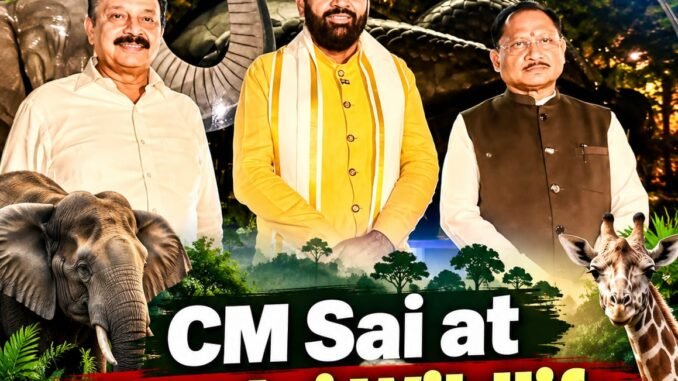
Raipur/Singapore: Chhattisgarh is exploring global practices to transform its rich forests and wildlife resources into a sustainable eco-tourism opportunity. Chief Minister Vishnu Deo Sai visited Singapore’s renowned Mandai Wildlife Reserve and reviewed its approach to wildlife conservation, habitat management and modern visitor facilities.
Accompanied by Haryana Chief Minister Nayab Singh Saini, Sai observed how wildlife protection and tourism have been integrated at the reserve. The visit was part of his Singapore programme during participation in the first Singapore-India Network for Growth (SING) Forum 2026.
Chhattisgarh’s forests offer huge tourism potential
With nearly 44 per cent of its geographical area under forests, Chhattisgarh has a strong natural advantage for eco-tourism. Its forests, wildlife and rich biodiversity stretch from Bastar to Surguja, offering opportunities for nature-based tourism and wildlife experiences.
The state is looking at ways to combine its natural assets with better visitor facilities, conservation practices and greater participation of local communities.
Learning from Singapore, developing a local model
During the visit to Mandai Wildlife Reserve, the Chief Minister studied wildlife management, visitor facilities, conservation awareness and the overall integration of tourism with the natural environment.
Sai stressed that Chhattisgarh would not replicate the Singapore model directly. Instead, useful international practices would be adapted to the state’s own geographical conditions, biodiversity and local requirements.
Bastar to Surguja in focus
Destinations such as Bastar, Kanger Valley, Achanakmar, Indravati and Udanti-Sitanadi highlight Chhattisgarh’s vast natural tourism potential. Better integration of conservation, modern tourist facilities and community participation could help the state emerge as a prominent eco-tourism destination in India and eventually on the global tourism map.
The Mandai Wildlife Reserve visit has provided an opportunity to study an internationally recognised conservation and tourism model and identify practices that can be adapted to Chhattisgarh’s unique natural environment.
The objective is not merely to increase tourist footfall, but to make tourism a means of conservation, local development and sustainable employment while keeping forests and wildlife protected.